Essential Catering Tips for Large Events
Essential Catering Tips for Large Events4
Catering for a large event requires more than great food—it demands careful planning, efficient logistics, and seamless coordination. Whether you’re organizing a wedding, corporate function, festival, or community gathering, the success of your event often depends on how well the catering is executed. Here are essential catering tips to help you deliver a smooth, satisfying experience for every guest.
1. Know Your Guest Count Early
An accurate headcount is the foundation of successful large-scale catering. Confirm numbers well in advance and include a small buffer for unexpected attendees. Knowing your guest count helps caterers plan food quantities, staffing, equipment, and service style efficiently, reducing both shortages and unnecessary waste.
2. Design a Practical and Flexible Menu
When catering for large groups, simplicity and scalability are key. Choose dishes that can be prepared in bulk without compromising quality. Offer a balanced menu with a mix of vegetarian, non-vegetarian, and dietary-friendly options such as vegan, gluten-free, or allergen-free dishes. Avoid overly complex recipes that require last-minute preparation, as they can slow service and increase the risk of errors.
3. Choose the Right Service Style
The service style should match the event type, venue, and guest flow. Buffets are popular for large events as they are efficient and offer variety, but they require proper layout planning to avoid long queues. Plated meals create a more formal experience but need precise timing and adequate staff. Food stations or live counters add interaction and visual appeal while helping distribute crowds evenly.
4. Plan Logistics and Equipment Carefully
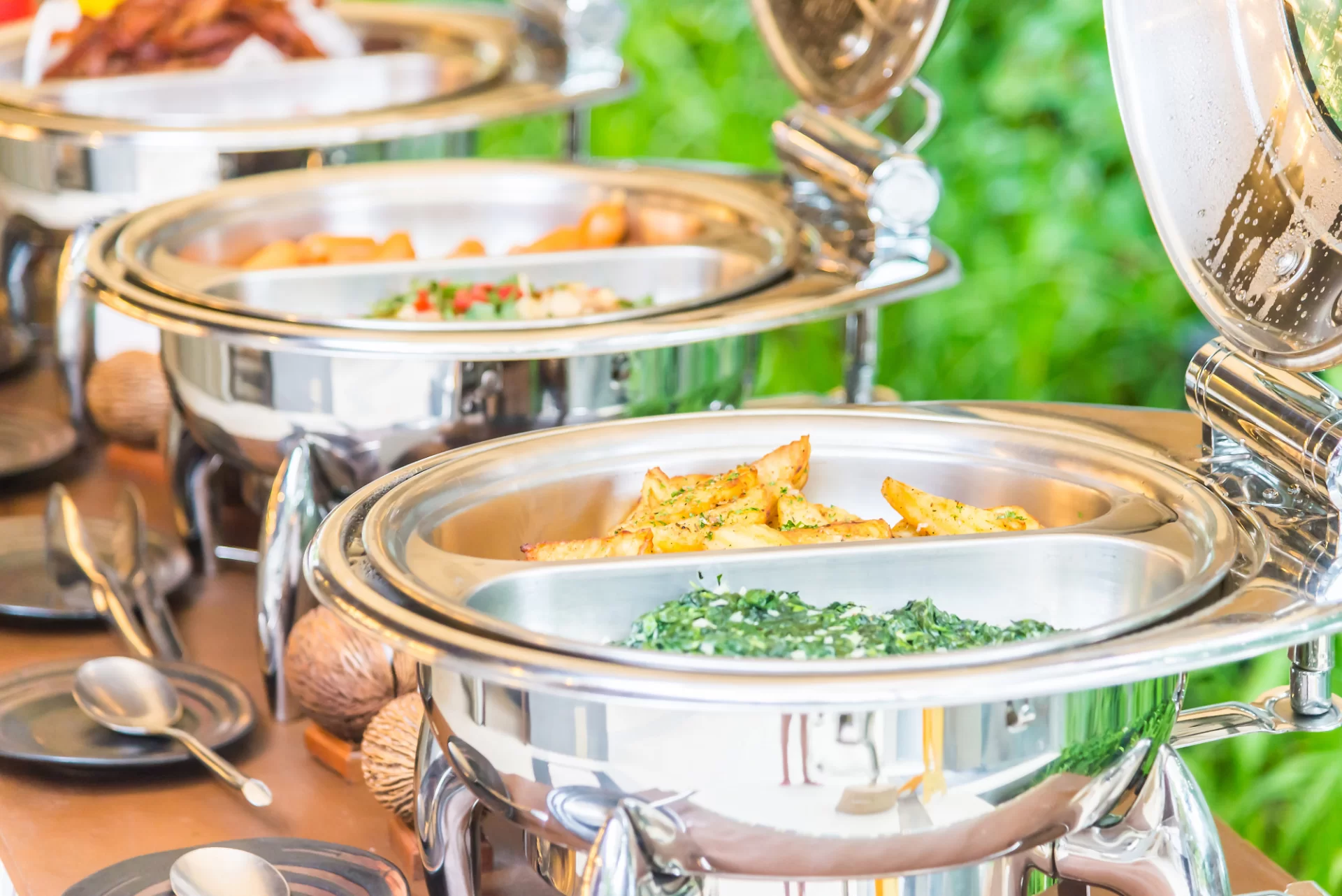
Large events demand strong logistical planning. Ensure there is adequate kitchen space, power supply, water access, and storage at the venue. Coordinate equipment such as chafing dishes, warming stations, refrigerators, serving tables, and waste disposal units. For outdoor events, weather-proof arrangements and backup plans are essential to protect food quality and safety.
5. Staff Adequately and Train Well
Well-trained staff can make or break the catering experience. Ensure you have enough chefs, servers, bartenders, and support staff to handle peak service times smoothly. Brief the team on menu details, service flow, guest interaction, and hygiene standards. Clear communication between staff members helps maintain efficiency and professionalism throughout the event.
6. Focus on Food Safety and Hygiene
Food safety becomes even more critical at large events. Maintain proper temperature control for hot and cold dishes, follow strict hygiene practices, and ensure staff use gloves, hairnets, and clean uniforms. Clearly label food items, especially those containing common allergens, to ensure guest safety and comfort.
7. Manage Timing and Flow
Timing is crucial when serving large crowds. Coordinate food service with the event schedule so meals don’t clash with speeches, performances, or key activities. Stagger service times if possible, and keep refill stations ready to avoid empty trays during peak hours.
8. Reduce Waste and Plan Smart Portions
Over-catering can be costly and wasteful. Work with your caterer to estimate realistic portion sizes based on event duration, menu type, and guest profile. Use smart serving strategies and consider donating surplus food where permitted.
Final Thoughts
Successful catering for large events is about preparation, teamwork, and smart decision-making. When menu planning, logistics, staffing, and service style are thoughtfully aligned, catering becomes a highlight rather than a challenge. With the right approach, you can ensure that every guest enjoys a smooth, satisfying dining experience—no matter how big the event.